Introduction
Choosing between a hub motor and a mid‑drive motor is one of the biggest decisions when buying or converting an electric bike. The choice affects performance, handling, maintenance, and the types of rides you can comfortably do.
Below you’ll find a practical, component‑level explanation of how each motor works, clear pros and cons, installation and maintenance considerations, and a short checklist to help you pick the right setup. If you’re shopping or browsing parts, start by exploring ElectricBikes for a range of kits and components.
How hub motors work
Hub motors are built into the wheel hub (front or rear). They provide direct drive from the motor to the wheel with minimal drivetrain interaction. Power delivery is simple: the motor spins the wheel, and the bike moves. Because they sit in the wheel, hub motors are mechanically straightforward and often plug‑and‑play.
Hub motor types and where to buy kits
There are two common hub motor types: geared hub motors (with internal planetary gears) and direct‑drive (gearless) hub motors. Geared hubs deliver better low‑speed torque and are lighter; direct‑drive hubs are quieter, more durable at high speeds, and better for regenerative braking on some setups. If you want to convert an existing bike, look at available Electric Bike Hub Motor Kits to compare power, wheel sizes, and included controllers.
Practical advantages and limitations of hub motors
Advantages of hub motors:
- Simple installation—many kits replace a wheel and wire to a controller.
- Lower cost and fewer routine maintenance points.
- Can provide strong top‑end speed on direct‑drive units.
Limitations to consider:
- Weight concentrated at the wheel affects handling, especially on lighter bikes.
- Less efficient on steep climbs compared with a mid‑drive that leverages gears.
- Rear hub motors depend on compatible frames and spacing—check Electric Bike Rear Wheel Conversion Kits if converting a rear wheel.
How mid‑drive motors work
Mid‑drive motors sit at the bike’s bottom bracket and drive the crank, applying power through the chain to the bike’s gears. Because they work through the drivetrain, mid‑drive motors multiply torque through the gear cassette, making them very effective at hill climbing and carrying loads. Mid‑drive setups are common in performance e‑MTBs and cargo e‑bikes.
For DIY conversion or upgrades, check available Electric Bike Mid Drive Conversion Kits to compare torque sensors, mounting options, and required bottom bracket sizes.
Practical advantages and limitations of mid‑drive motors
Advantages of mid‑drive motors:
- Excellent hill performance because the motor benefits from the bike’s gearing.
- Balanced weight distribution improves handling and cornering.
- More natural ride feel and better pedal‑assist integration (especially with torque sensors).
Limitations:
- Higher cost and more complex installation—you may need specific bottom bracket standards and a compatible chainset.
- Increased wear on the chain and cassette since the motor applies torque through them. A popular and well‑supported option is the TSDZ Mid Drive Conversion Kit, which balances cost and functionality for many riders.
Power, torque, and efficiency: head‑to‑head
Torque and how you use it are the main performance differentiators:
- Mid‑drive motors usually peak at lower RPMs and rely on the bike’s gears to stay in an efficient power band—this yields superior climbing and load‑carrying performance.
- Hub motors deliver power directly to the wheel and can provide immediate acceleration and consistent top speed without stressing the drivetrain.
- Efficiency depends on use case: flat, long rides may favor hub motors; variable terrain with steep climbs favors mid‑drive units.
For different motor sizes and specifications, compare options in the Electric Bike Motors category to match power, RPM, and mounting style to your intended use.
Installation, compatibility and essential components
Whether you choose hub or mid‑drive, you also need a compatible controller, throttle or PAS, and a battery sized to your motor’s current draw and desired range. Controllers manage motor phase and battery current; choosing the right controller ensures reliable performance and protects components. Browse Electric Bike Controllers that match your motor voltage and rated amperage.
Other compatibility notes:
- Check wheel spacing, axle type, and dropout width for hub kits.
- Confirm bottom bracket type and chainline for mid‑drive conversions.
- Match battery voltage (36V, 48V, etc.) to motor and controller specs.
Maintenance, troubleshooting and battery considerations
Maintenance differs by motor type. Hub motors are mostly sealed—regular checks focus on connectors, spokes, and bearings. Mid‑drive systems require additional drivetrain maintenance: more frequent chain and cassette replacement, careful torque settings on chainrings, and occasional bottom bracket inspections.
Battery selection dramatically affects range and performance. Higher capacity batteries extend range but add weight; voltage determines available power. For replacement and upgrades, see the Electric Bike Batteries category and match capacity, voltage, and BMS features to your motor and controller.
Checklist: Choosing the right motor
- Primary ride type: commuting/flat vs hilly/cargo/MTB?
- Desired balance: lower cost & simplicity (hub) vs climbing & handling (mid‑drive)
- Frame compatibility: dropout width, bottom bracket type, and wheel size
- Battery voltage and capacity matched to motor and controller
- Planned maintenance tolerance (mid‑drive increases drivetrain wear)
- Legal/power limits for local e‑bike regulations
FAQ
Q: Which motor is better for hill climbing?
A: Mid‑drive motors are generally better because they use the bike’s gears to multiply torque.
Q: Are hub motors easier to install on an existing bike?
A: Yes. Hub kits usually replace the wheel and are simpler for DIY installs, especially front hub kits for non‑rear‑dropout constraints.
Q: Will a mid‑drive motor wear out my chain faster?
A: Yes. Mid‑drive torque goes through the chain and cassette, increasing wear—plan on more frequent drivetrain maintenance.
Q: Can I use regen braking with a hub motor?
A: Some direct‑drive hub motors support regenerative braking, but regen is limited on bikes compared with cars and often provides modest benefits.
Q: How do I match a battery to my motor?
A: Match the battery voltage to the motor/controller voltage and choose capacity (Wh) to meet your range goals. Ensure the BMS supports the required discharge rate.
Conclusion — practical takeaway
Pick a hub motor if you want lower cost, easier installation, and minimal drivetrain maintenance for primarily flat rides. Choose a mid‑drive if you need hill‑climbing power, balanced handling, and integration with the bike’s gears—accepting higher cost and more drivetrain upkeep. Use the checklist above, verify compatibility, and compare specific kits and components before buying.
Products Featured in This Article
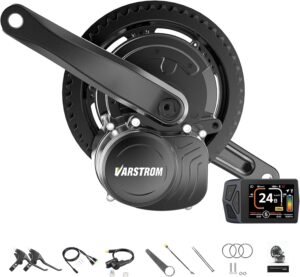
TSDZ Mid Drive Conversion Kit 36V 2…
Packing list: – 250 W mid-mounted motor. – Brake sensors. – EKD01 display. – Thumb throttle…
