Electric Bike Tire Guide: What Riders Should Know About Comfort and Safety
Tires are the most important contact point between an electric bike and the road. The right tire choice directly affects ride comfort, handling, range, and—most critically—safety. This guide distils what riders need to know to pick, fit, and maintain e-bike tyres for everyday riding or off-road adventures.
Below you’ll find clear advice on sizes, tread, pressures, puncture protection, and practical maintenance. Wherever helpful, links point to products and categories to explore compatible tyres, tubes, and wheel kits.
Why e-bike tires differ from regular bike tires
Electric bikes are heavier and faster than traditional bikes, which increases forces on tyres, rims, and brakes. E-bike tyres often have reinforced casings, higher load ratings and different tread compounds to handle torque and sustained speeds. Choose tyres rated for e-bike use rather than assuming standard bicycle tyres are sufficient.
For a dedicated selection of parts designed for e-bikes, start with the Electric Bike Tires category to compare specifications like load rating and ECE/EN certification.
Understanding tyre sizes, widths and rims
Tyre size is written as diameter x width (e.g., 26 x 2.2 or 700 x 38c). Width affects comfort and rolling resistance: wider tyres at lower pressure give more cushioning and grip; narrower tyres roll faster but transmit more bumps. Make sure the tyre width fits your rim and frame clearance.
Common e-bike classes use 26″, 27.5″, 29″ or 700C wheels. If you’re replacing a complete wheel or converting a bike to electric drive, check compatibility—kits such as the 48V 29inch Rear Wheel E-Bike Conversion Kit come with tyre and rim dimensions you’ll need to match.
Tread patterns: matching tyres to terrain
Tread choice balances traction, speed and puncture resistance:
- Low-profile, slick or semi-slick treads — best for pavement and commuting; lower rolling resistance and longer range.
- Intermediate treads — good for mixed surfaces and light trails; compromise between grip and efficiency.
- Aggressive knobby treads — designed for off-road and technical trails to maximize grip at the expense of range and speed.
For trail-focused tyres and guidance on off-road setups, review offerings in the Electric Mountain Bikes and the Electric Fat Tire Bikes categories to see tyre and wheel pairings that match intended use.
Fat tyres vs. narrower tyres: comfort and control
Fat tyres (3.0–5.0″) are excellent for soft sand, snow and rough surfaces; they absorb impacts and offer stability at low pressures. Products such as YunSCM 2PCS 26 Inches Fat E-Bike Tyres show the typical size and construction of fat e-bike tyres.
For urban commuting or touring where efficiency and range matter, narrower tyres (1.5–2.4″) at higher pressure are a better choice—faster on tarmac and lighter overall. Choose based on the majority of your riding conditions.
Puncture protection: tubes, liners and tubeless systems
Punctures are a leading cause of roadside stops. You can reduce risk with thicker inner tubes, puncture-resistant tyres, or tubeless setups filled with sealant. If you prefer tubes, match the valve type and size—common options include Schrader or Presta. For replacement tubes, see products like the Fincci 26 inch inner tube, and verify valve length for deep-rim wheels.
Tubeless tyres + sealant reduce punctures and allow lower pressures for comfort and traction, but require compatible rims and careful installation. If you ride rough terrain frequently, tubeless or reinforced tyres are worth considering.
Inflation pressure: balancing comfort, grip, and range
Pressure matters more on e-bikes due to weight. Under-inflation increases rolling resistance and risk of pinch flats; over-inflation reduces traction and comfort. Start with the tyre sidewall’s recommended range and adjust by rider weight and load: heavier riders and cargo require the higher end of the range. Check pressure weekly and before long rides.
Replacing tyres and tubes: practical fitment tips
When changing tyres, inspect rim tape, spoke nipples and rim condition. Confirm the tyre bead seats correctly and spins true. If you’re fitting a new wheel or converting to hub drive, match motor kit specifications to rim and tyre sizes—many conversion kits specify compatible wheel sizes; see the Electric Bike Tires listings alongside conversion kits for compatibility checks.
If you plan to swap between wheelsets seasonally (e.g., knobbies for summer, slicks for winter), store spare wheels and tyres properly: clean, dry, and off the ground. Use a compact hanger to save space and protect tyre shape—consider Electric Bike Wall Mounts for tidy storage.
Maintenance schedule and safety checks
Regular inspections keep tyres safe and predictable:
- Weekly: check pressure and quick visual for cuts, embedded glass or wires.
- Monthly: examine sidewalls, tread wear and bead seating; rotate if using non-driven front/rear tyres with different wear rates.
- Before long rides: check valve cores, tyre mount security, and carry a pump, spare tube or repair kit.
Checklist: quick actions before every ride
- Check tyre pressure (use recommended range on sidewall).
- Scan tread and sidewalls for cuts, bulges or embedded debris.
- Ensure the tyre is seated and rim is free of damage.
- Carry a pump, tyre levers, and spare tube or patch kit.
- Confirm wheel nuts/axle bolts or thru-axles are tightened to spec.
FAQ
- Q: How often should I replace e-bike tyres?
A: Replace when tread depth is low, cords show, sidewalls crack, or if punctures become frequent. Typical life varies widely—commuter tyres might last 2,000–6,000 km; off-road tyres less. - Q: Can I use any tyre on an e-bike?
A: Use tyres rated for e-bike speeds/loads where possible. Check load rating and manufacturer notes—standard bike tyres may not cope with sustained higher speeds and torque. - Q: Are tubeless tyres worth it for commuting?
A: Tubeless reduces punctures and allows lower pressures for comfort, but requires compatible rims and maintenance. For heavy commuting with frequent debris, tubeless plus sealant is a good investment. - Q: What pressure should I run on fat tyres?
A: Fat tyres work at low pressures (often 5–20 psi) depending on terrain and load. Start mid-range and test—lower pressures increase traction but risk rim strikes on hard impacts. - Q: Can I upgrade to wider tyres on my e-bike?
A: Only if frame and fork clearance permit and rim width is compatible. Measure available clearance and consult rim/tyre compatibility charts before upgrading.
Conclusion — practical takeaway
Choose tyres based on your primary riding surface, load and priorities: comfort and puncture resistance for commuting, aggressive treads for trails, and fat tyres for sand or snow. Match tube or tubeless setups to your rims and keep regular pressure and visual checks. For compatible tyres, tubes and related parts, explore the site’s tyre listings and product pages mentioned above to find items suited to your e-bike model and riding needs.
Products Featured in This Article

YunSCM 2PCS 26 Inches Fat E-Bike Ty…
To calculate the overall star rating and percentage breakdown by star, we don’t use a simple…

Fincci 26 inch inner tube -Bike Inn…
Product Description FINCCI BRAND Great tires from a UK-based brand Fincci. Fincci bike tires and inner…
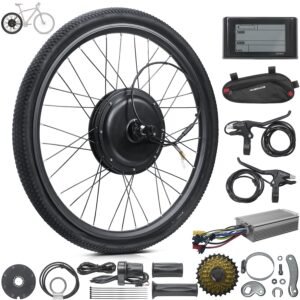
48V 29inch Rear Wheel E-Bike Conver…
Important Compliance Note: Max continuous rated power:250W Max speed: 25km/h or 15.5mph Kit Includes: 1x controller…
