Electric Bike Battery Guide: Range, Charging, Care, and Lifespan Explained
Battery is the single most important component on an electric bike for range, reliability and running costs. This guide explains how manufacturers measure range, the real-world factors that shorten it, best charging and storage habits, and realistic expectations for battery lifespan.
Whether you commute, ride trails, or are thinking about converting a bike, this practical guide gives clear, actionable steps to get the most from your battery and avoid surprises on the road.
How range is measured (and why the numbers vary)
Manufacturers report range using a mix of ideal conditions: moderate speed, flat terrain, conservative pedal assist, a single rider weight, and favourable weather. Those numbers are a useful starting point but rarely reflect everyday riding.
If you plan to use your e-bike for daily commutes make sure you compare manufacturer ranges with typical commuting loads and hill profiles — categories like Electric Commuter Bikes often publish usable-range examples for urban rides.
Key factors that affect real-world range
Range depends on more than battery capacity (Wh). Major variables include:
- Rider weight and cargo
- Average speed (higher speeds drain battery faster)
- Gradient and terrain type
- Tire pressure and rolling resistance
- Assist level and how much you pedal
- Temperature (cold reduces available capacity)
Mountain and off-road use shortens range because of steeper gradients and inefficiencies — if you ride trails, check performance information from Electric Mountain Bikes for comparable conditions.
Understanding battery specs: voltage, amp-hours, and watt-hours
Battery capacity is most usefully expressed in watt-hours (Wh = V × Ah). A higher Wh number generally equals longer range under similar conditions. Voltage impacts motor performance: 36V systems are common for city bikes, 48V and 52V systems are used for higher-performance bikes.
When shopping for replacement packs or chargers, choose batteries with built-in BMS and appropriate voltage and connector type for your motor. Example packs like the 48V 52V Electric Bike Triangle Lithium Battery Pack show the specs and charging hardware included — always match voltage and connector compatibility rather than guessing.
Charging best practices
Follow these rules for safe, long-lived charging:
- Use the supplied charger or a manufacturer-approved replacement.
- Charge at room temperature and avoid charging in freezing or very hot conditions.
- Avoid leaving the battery at 0% for long periods; charge before storage below ~30%.
- Avoid leaving the battery permanently at 100% when stored — partial charge (~40–70%) is best for long-term storage.
- Unplug once charging is complete; most chargers cut out, but prolonged top-off can heat cells.
Fast charging is convenient but can slightly accelerate cell degradation; use it sparingly if lifespan is a priority.
Storage, cleaning and seasonal care
Proper storage and cleaning protect capacity and safety. If you keep your bike in a garage or inside, use equipment that prevents physical damage and moisture exposure. For space-saving secure mounts consider options such as Electric Bike Wall Mounts to keep the bike and battery off the floor and away from leaks or damp.
When cleaning the bike avoid high-pressure water directly on the battery, motor or connectors. If you remove the battery for storage, store it indoors at partial charge and check every 2–3 months to recharge to the recommended level.
Transport and protection for bikes and batteries
Transporting an e-bike or battery requires planning to prevent damage and comply with vehicle rules. For trips and travel, padded travel bags are designed to protect frames and batteries and reduce movement stresses — consider a purpose-built option like Electric Bike Travel Bags.
For shorter transfers in a car use secure carriers — trunk or hitch-mounted carriers compatible with heavy e-bikes reduce strain on frames and make load/unload safer. Look at examples such as Electric Bike Car Racks when choosing a carrier that suits your bike’s weight and wheelbase.
Battery replacement, conversions and upgrades
If your current battery no longer holds adequate charge it may be aged or damaged. Replacing with the correct spec pack or upgrading to a higher-capacity pack can extend range — conversion and upgrade options are available in kit form if you’re converting a regular bike to electric. Explore compatible solutions under Electric Bike Battery Conversion Kits.
When replacing cells or packs, prioritize reputable sellers, matching voltage, quality BMS, and physical fit. Improper installs can be dangerous — if in doubt, consult a qualified e-bike technician.
Troubleshooting common battery problems and maintenance tools
Symptoms and quick checks:
- Rapid capacity loss: Check cell balancing, charge history and storage temperature; aging cells are the usual cause.
- Bike won’t boot or display errors: Inspect connectors, fuses and wiring; a loose battery connector is a frequent culprit.
- Unusual heating: Stop using and seek professional help — excessive heat can indicate internal damage.
For maintenance and stable workshop positioning use sturdy stands that accommodate e-bike weight; items like Electric Bike Floor Stands keep the bike secure for inspections, wheel removal and battery access.
Checklist: Quick daily and monthly checks
- Daily: Check battery charge level and connectors before rides.
- Weekly: Inspect for corrosion or water ingress at connectors; check tire pressure (low pressure increases draw).
- Monthly: Run a full-charge/usage cycle to gauge effective capacity; inspect charger and cabling for damage.
- Seasonal: Store at ~40–60% charge in a temperature-stable place; check again every 2–3 months.
FAQ — short answers to common battery questions
Q: How long does an e-bike battery last?
A: Typical useful service life is 2–5 years or 500–1,500 full charge cycles depending on chemistry, care and usage patterns.
Q: Can I charge the battery after every short ride?
A: Yes — frequent shallow charges are better than deep discharge cycles for lithium cells and help preserve capacity.
Q: Is it safe to leave the battery on the bike in rain?
A: Most batteries are splash-resistant, but avoid high-pressure washing and prolonged exposure to heavy rain; remove and store indoors when possible.
Q: Will a higher voltage battery damage my motor?
A: Yes — using a higher-voltage pack than the motor/controller is rated for can overload components. Always match voltage and consult specs.
Q: When should I replace the battery rather than recharge it repeatedly?
A: Replace when capacity falls to a level that no longer meets your range needs despite correct charging and maintenance, or if there is physical or internal damage.
Conclusion: Practical takeaway
Understand that advertised range is a guideline—real range varies with weight, terrain, assist level and temperature. Charge and store batteries properly, check connectors and use the correct charger. If you need to transport or upgrade your setup, use purpose-built travel bags, racks and conversion kits to ensure compatibility and safety.
Start with regular checks from the checklist, match replacement packs to your system specifications, and you’ll keep your e-bike reliable and efficient for years.
Products Featured in This Article
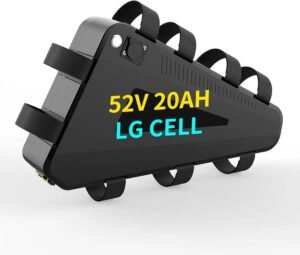
48V 52V Electric Bike Triangle Lith…
Applicable motors: 48V/52V 350W–2000W Nominal voltage: 48V/52V Rated Capacity: 20Ah Maximum Constant Current Discharge: 50A/40A (with…
