Electric Bike Conversion Kit Guide: What to Know Before Upgrading a Regular Bike
Converting a regular bike into an e-bike is a cost-effective way to get electric assist without buying a new frame. A conversion kit can extend your commuting range, make hills easier, and breathe new life into a trusted bike—but not every kit fits every bike or rider.
This guide walks through the practical decisions to make before you buy: types of kits, compatibility checks, electrical components, installation realities, safety upgrades and ongoing maintenance. Read these points to avoid common mistakes and choose a kit that delivers reliable performance.
Types of conversion kits and what they change
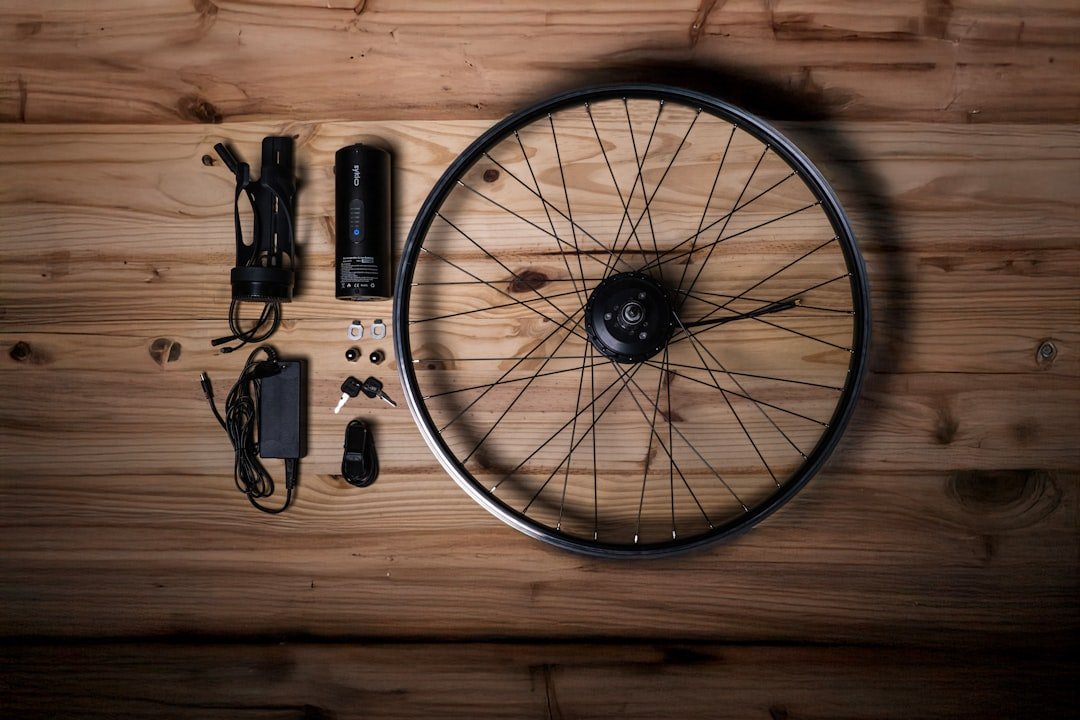
Conversion kits fall into three broad groups: front hub, rear hub and mid-drive systems. Each changes weight distribution, drivetrain complexity, and installation difficulty. Front and rear kits are common because they replace a wheel or hub assembly; mid-drive kits replace the bottom-bracket motor and keep the bike’s gearing advantages.
If you want a simple, wheel-swap approach, look at Electric Bike Front Wheel Conversion Kits—they often work for many commuter and city bikes with standard forks and axle types.
Front vs rear vs hub motor kits: ride feel and trade-offs
Front-hub kits are easiest to install and tend to be cheaper, but they can affect steering feel and traction in slippery conditions. Rear-hub kits deliver more natural traction and better acceleration because they drive the rear wheel, but they require more careful alignment with your cassette and frame dropouts.
For many riders balancing simplicity and performance, Electric Bike Rear Wheel Conversion Kits offer a reliable compromise—expect slightly more work at install and attention to chainline and gear compatibility.
Compatibility: frame, wheel size and brakes
Before buying any kit check three mechanical fit points: wheel diameter and axle spacing, fork or dropout type, and brake type (rim vs disc). Kits are often sold for specific wheel diameters and axle standards—mismatches can mean you can’t install the hub or will need specialized adapters.
If your bike uses a common wheel size, many kits are available for multiple diameters—examples include multi-size offerings such as the 20/24/26/27.5/28 inch 700C E-Bike Conversion Kit, which states compatible wheel diameters and includes controller and throttle hardware for front-hub installs.
Power, battery and range: matching motor and battery
Decide the power level you need based on terrain and load. Typical conversion motors range from 250W for urban commuting to 500W+ for hilly or cargo use. More power means more battery capacity and likely heavier components.
Choose a battery that matches voltage and connector type of the motor/controller and provides adequate capacity. Browse compatible cells and packs in the Electric Bike Batteries category when you’re matching runtime to your expected route and assist levels.
Controllers, throttles and electronics to understand
The motor controller is the electrical brain that regulates power delivery and interfaces with throttle, PAS (pedal assist) and displays. Controllers vary by voltage, current rating and feature set (programmable PAS, regenerative braking support, LCD data readouts).
When comparing kits, review controller specs and whether the controller supports your preferred pedal-assist modes. You can also shop for spare or upgraded controllers in the Electric Bike Controllers section if you need a specific current rating or extra features.
Installation: tools, time and realistic difficulty
Installing a wheel-based kit often requires a handful of basic bike tools: allen keys, cone wrenches, chain tool, torque wrench and sometimes a cassette remover if swapping a rear hub. A mid-drive conversion needs BB removal tools and more mechanical skill.
If you want to add or replace throttle hardware during install, consider compatible throttle products such as the 130X E-Bike Thumb Throttle, which is a straightforward handlebar-mounted option for many kits.
Brakes, tires and safety upgrades
Extra weight and higher speeds increase stress on braking systems. If your bike has rim brakes, consider upgrading to higher-performance pads or switching to discs where possible. Always check that your current brake calipers and rotors can handle the added loads.
Quality replacement brake pads can make a big difference—see options like the 4pcs Bike Brake Pads, High-Performance Semi-Metallic for durable stopping power on heavier e-bike builds.
Maintenance and long-term considerations
Converted e-bikes require regular checks: torque on axle nuts/bolts, battery health and connectors, brake pad wear, and spoke tension (hub motors add lateral forces). Keep spare parts like fuses, spare brake pads and a basic multi-tool on hand.
Battery care is especially important—store at moderate state-of-charge, avoid deep discharge if possible, and use the manufacturer’s charger to protect the BMS and cells.
Checklist before you buy
- Confirm wheel size and axle/dropout standard for the kit.
- Verify brake type compatibility and plan any upgrades.
- Match motor voltage to battery and controller ratings.
- Decide on throttle vs PAS preference and compatible controls.
- Budget for professional help if you lack the tools/skills.
FAQ
- Q: Will a conversion kit void my bike warranty?
A: Manufacturers vary—check your bike warranty terms. Installing third-party hardware often isn’t covered by the original frame/fork warranty. - Q: Can I install any kit on a carbon frame?
A: Carbon frames need special care. Avoid forcing axle spacings or overtightening. Consult the frame maker or a qualified mechanic before swapping hubs on carbon dropouts. - Q: How do I choose motor wattage?
A: For flat urban use, 250–350W is efficient. For steep hills or cargo, 500W+ gives better performance but requires higher-capacity batteries and stronger brakes. - Q: Do I need a cadence sensor or torque sensor?
A: Cadence (PAS) sensors are cheaper and responsive; torque sensors feel more natural and proportional but cost more and can be harder to retrofit. - Q: Is adding a throttle legal everywhere?
A: Regulations differ by region—research local e-bike laws regarding throttle assist and maximum assisted speeds before fitting one.
Conclusion
Choose a conversion kit by matching the mechanical fit (wheel size, dropouts, brakes), the electrical system (motor voltage and battery capacity) and the rider experience you want (front vs rear vs mid-drive, PAS vs throttle). Plan for brake and tire upgrades, and budget time or a professional install if needed. Proper preparation will make your conversion safe, reliable and enjoyable.
Products Featured in This Article

130X E-Bike Thumb Throttle Compatib…
Features: ▻Durable Construction: Made from premium aluminum alloy, the electric bike thumb throttle is built to…

4pcs Bike Brake Pads, High-Performa…
Specification: Color: black Material: Metal Product Size: Brake Pads: 3.2×2.7cm/1.25×1.06in Metal Pins: 3.7cm/1.45inPackage details: 4 x…
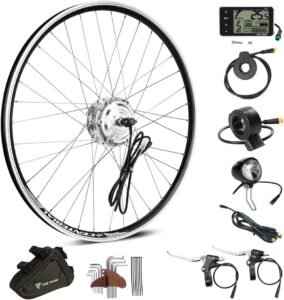
20/24/26/27.5/28 inch 700C E-Bike c…
SHIMOST 20/24/26/28 inch 700C E-Bike conversion kit 36V250W front hub motor for bicycle front wheel with…
