The question of range—how far an electric bike can travel on a single charge—is one of the first things riders ask. It determines daily commutes, weekend adventures and whether an e-bike can replace a car for many trips. This guide cuts through marketing claims and shows how to estimate realistic distances for your riding style.
Range depends on measurable technical factors and everyday variables. If you’re shopping or optimizing an existing bike, start with the basics and then adjust for terrain, cargo and riding habits to get a reliable number. For model browsing, see ElectricBikes to compare categories and typical specs.
How range is measured: batteries, watt-hours and real numbers
Manufacturers often quote range in kilometers or miles, but the most reliable spec is battery capacity in watt-hours (Wh). Wh = volts × amp-hours. A 48V 20Ah battery has about 960 Wh; a 36V 10Ah has 360 Wh. Higher Wh usually equals more range, all else equal.
Beyond capacity, motor efficiency, controller settings and regenerative braking (if any) affect usable miles. If you want a larger battery or to replace a worn pack, consider a high-capacity option such as the 48V 52V Electric Bike Triangle Lithium battery pack as an example of high-Wh upgrade possibilities.
Typical ranges by bike type: commuters and folder examples
Different e-bike categories are built for different priorities, and range reflects that. Lightweight commuter e-bikes tend to be optimized for efficiency and can reach 40–100 km on a single charge depending on battery size and assist level. Browse real commuter designs at Electric Commuter Bikes.
Folding e-bikes prioritize portability and may carry smaller batteries to reduce weight. Typical folding bike ranges fall between 20–70 km per charge; long-range models push beyond that with larger removable packs. See portable options at Electric Folding Bikes.
Typical ranges by bike type: mountain and fat-tire bikes
Mountain and fat-tire e-bikes use more power over rough terrain and softer surfaces. Expect shorter ranges—often 25–60 km for heavy off-road use on a single mid-sized battery. For trail-oriented models see Electric Mountain Bikes.
Fat-tire e-bikes are heavier and their tires increase rolling resistance; however, many have larger batteries to compensate and can approach 60–100 km in mixed-ride conditions. If your rides include sand, snow, or heavy loads, check Electric Fat Tire Bikes for designs built for that work.
Real-world examples and manufacturer claims
Product specs often list a “max range” under ideal conditions (climate-controlled lab, flat route, low assist). Real riders typically see 60–80% of that figure. For example, a compact e-bike with a removable 36V pack might claim 60 km; in mixed urban riding you may expect 35–45 km. A real model with a removable battery and a 60 km stated max is the Finbike U4 Electric Bike, which illustrates how manufacturers balance pack size and portability.
How riding style and conditions change range
Key variables that shorten range:
- Higher assist levels and sustained throttle use
- Steep hills and frequent accelerations
- Heavy cargo, riders or trailers
- Cold temperatures (battery chemistry loses effective capacity)
- Underinflated tires and rough surfaces
To maximize distance, use lower PAS levels where possible, maintain momentum (avoid stop-start), keep tires inflated to the recommended psi, and plan routes with fewer climbs.
Upgrades and conversions to extend range
If your current bike’s range isn’t enough, options include larger battery packs, swapping for a more efficient motor or fitting conversion kits that improve performance. When upgrading battery capacity or converting a bike, choose components designed to work together to avoid overheating or controller mismatch.
For DIY conversion or upgrades, explore conversion kits and battery options at specialist product pages. A high-capacity battery pack or a matched conversion kit can substantially increase range and flexibility.
Transport and storage: practical tips that affect range and longevity
How you store and carry an e-bike can influence battery health and convenience. Long-term storage at very low charge or extreme temperatures reduces battery life. For transporting bikes without draining the battery, use appropriate racks or travel solutions.
When you need to move bikes to a trip or service, look at secure carriers. If you regularly transport through cars, consider Electric Bike Car Racks to avoid battery damage and to keep bikes stable.
Checklist: quick actions to maximize range
- Check battery Wh: higher Wh = more range.
- Keep tires at recommended pressure.
- Use PAS instead of full throttle when possible.
- Plan routes with fewer steep climbs when range is limited.
- Store battery at ~50% for long-term storage and avoid extremes of heat/cold.
FAQ
- Q: How do I estimate range before buying?
A: Divide battery Wh by an expected consumption rate: city/commute use ~8–15 Wh/km; hilly/off-road ~20–30 Wh/km. Adjust for rider weight and luggage. - Q: Does pedal assistance extend range compared with throttle-only?
A: Yes—pedal-assist keeps the motor working alongside your pedaling, which is more efficient than holding throttle continuously. - Q: Will a bigger battery always solve range anxiety?
A: A bigger battery increases range but adds weight and may require a compatible mounting system. Balance capacity with handling needs. - Q: How much does temperature affect range?
A: Colder temps can reduce available capacity by 10–30%; warm storage and pre-warming batteries help. - Q: Can I swap my bike’s stock battery for a higher-capacity pack?
A: Often yes, if the voltage matches and the controller supports the current draw—consult specs or a professional installer.
Final takeaway: use battery Wh as the baseline, then adjust for bike type, rider input and conditions. For commuting, aim for a battery that gives at least 30–50% more range than your longest typical trip to allow for detours and variable conditions. Regular maintenance and conservative assist use are the most cost‑effective ways to stretch every charge.
Products Featured in This Article
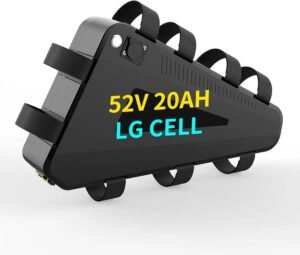
48V 52V Electric Bike Triangle Lith…
Applicable motors: 48V/52V 350W–2000W Nominal voltage: 48V/52V Rated Capacity: 20Ah Maximum Constant Current Discharge: 50A/40A (with…
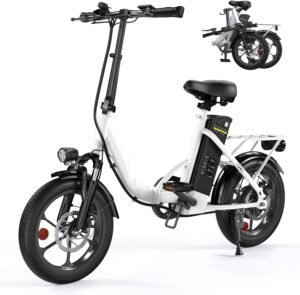
Finbike U4 Electric Bike, 16″…
Max Range: 60KM in pedal assist mode (depending on various factors, such as road conditions, user’s…
